River questions come up in almost every OSSC, OSSSC, OPSC and Odisha Police exam, and most of them test one thing: the order. Which Punjab river is the westernmost? Which east-coast river is the northernmost? Which prayag comes first on the Alaknanda?
Below are 9 short tricks that fix these orders in memory. After them you'll find a river–city table and 10 questions examiners like to ask.
Himalayan and peninsular rivers: the basic difference
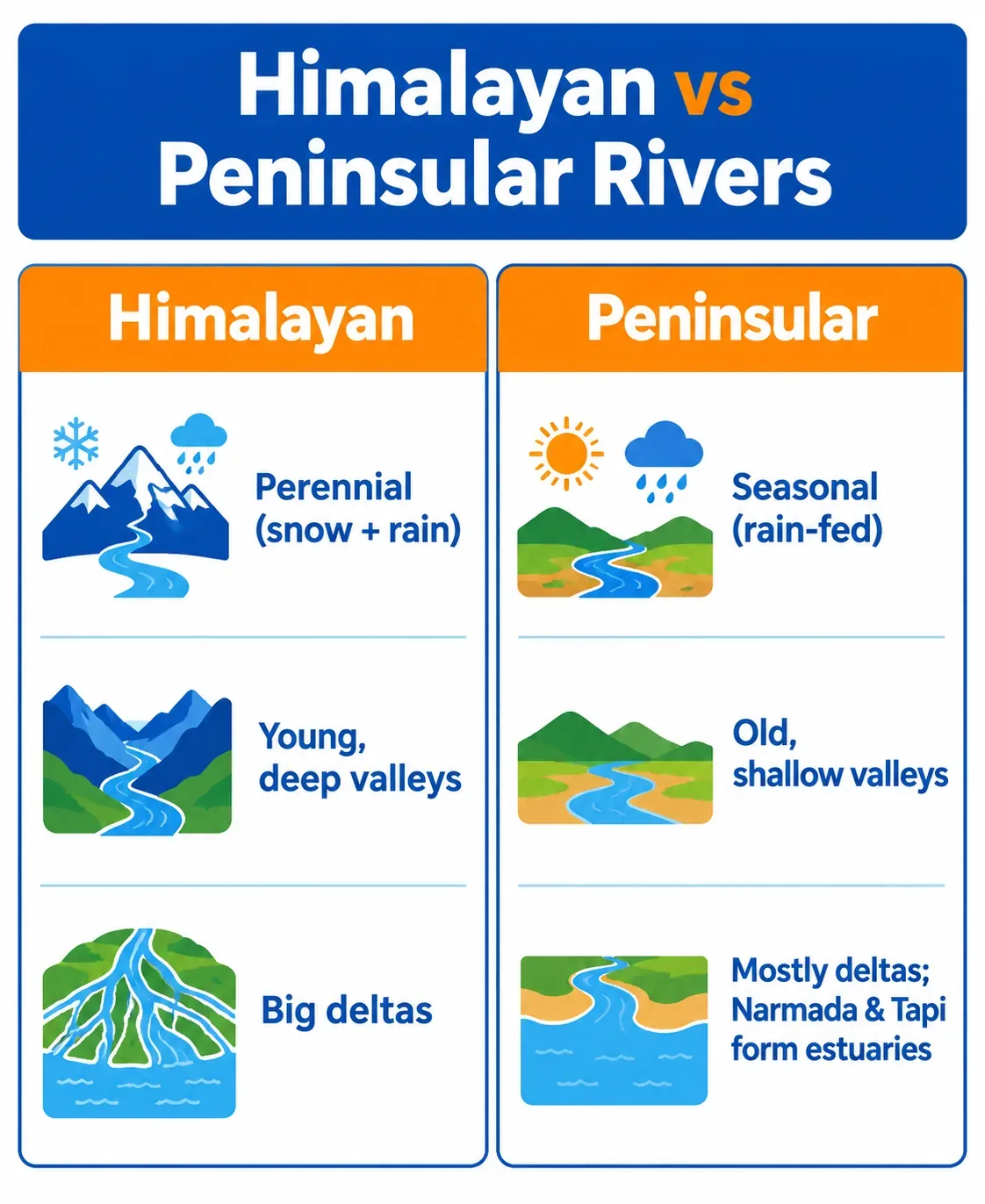
Point | Himalayan rivers | Peninsular rivers |
|---|---|---|
Water | Snow and rain, so they flow all year | Rain only, so many shrink in summer |
Age | Young; they cut deep gorges | Old; they flow in wide, shallow valleys |
At the sea | Big deltas (the Ganga–Brahmaputra delta is the world's largest) | East-flowing rivers form deltas; Narmada and Tapi form estuaries |
Examples | Indus, Ganga, Brahmaputra | Mahanadi, Godavari, Krishna, Kaveri, Narmada |
Trick 1: Punjab rivers, "Jack Can Run Before Sunset"
Question: Arrange the five rivers of Punjab from west to east
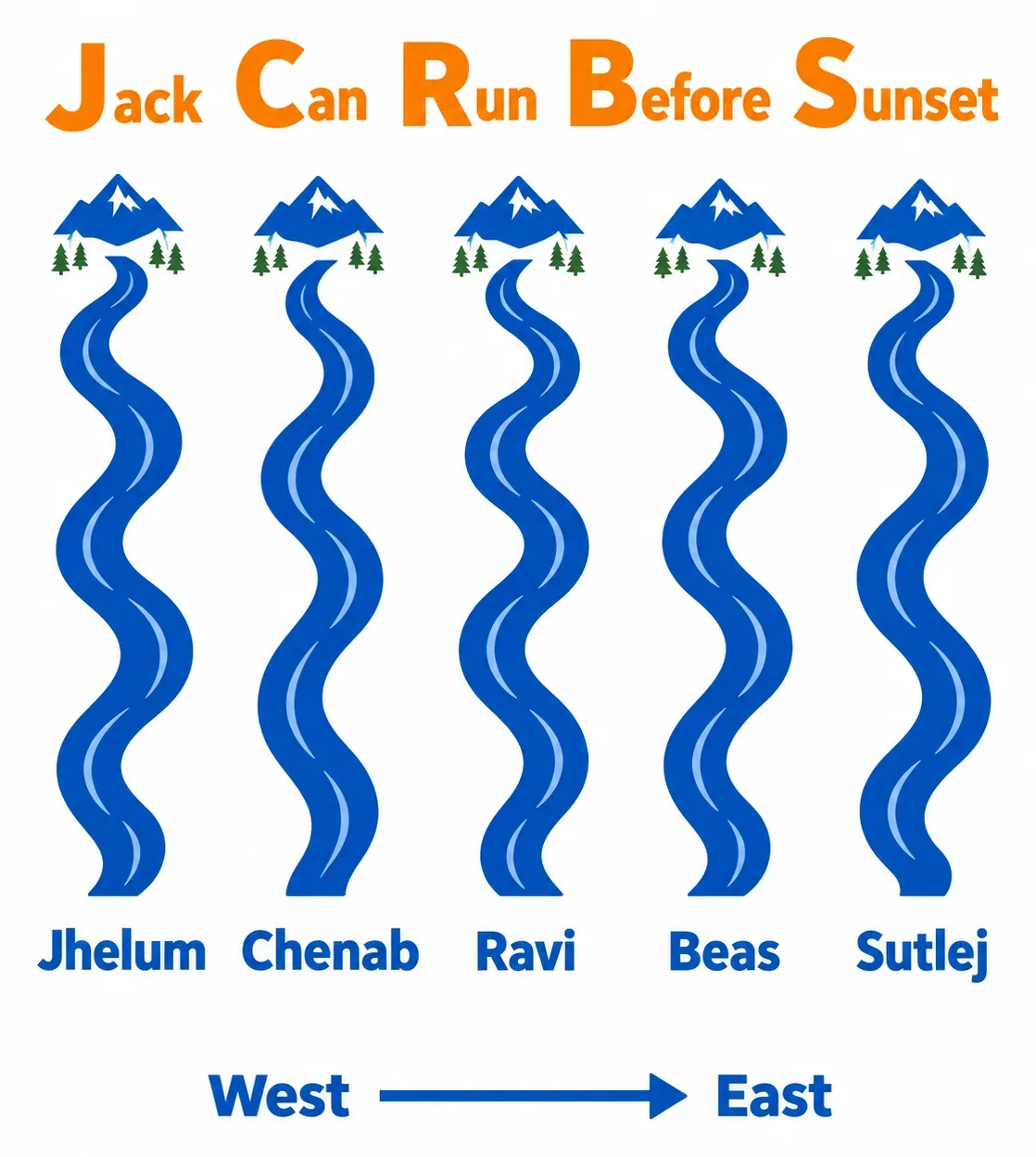
Jack = Jhelum, Can = Chenab, Run = Ravi, Before = Beas, Sunset = Sutlej.
Jhelum starts at the Verinag spring in Kashmir and flows through Srinagar.
Chenab is formed where the Chandra and the Bhaga meet at Tandi in Himachal Pradesh.
Beas joins the Sutlej at Harike in Punjab.
Sutlej is the longest of the five. It rises in Tibet near Rakas Tal and enters India through the Shipki La pass.
Under the Indus Waters Treaty of 1960, the eastern rivers (Ravi, Beas, Sutlej) went to India and the western rivers (Indus, Jhelum, Chenab) to Pakistan. In the trick, the last three words, "Run Before Sunset", are India's three. India put the treaty in abeyance in April 2025.
Trick 2: West-flowing rivers, "My Sister Never Talks"
Question: Which major rivers flow west into the Arabian Sea?
My = Mahi, Sister = Sabarmati, Never = Narmada, Talks = Tapi.
Mahi crosses the Tropic of Cancer twice, a favourite exam question.
Sabarmati flows past Ahmedabad and Gandhiji's Sabarmati Ashram.
Narmada is the longest west-flowing river of India. It runs between the Vindhya and Satpura ranges, and the Sardar Sarovar dam stands on it.
Tapi rises at Multai in Betul district, Madhya Pradesh. Surat is on its banks.
Why do Narmada and Tapi flow west when most peninsular rivers flow east? They run through rift valleys, long cracks in the earth's crust. The water moves fast in these narrow valleys and carries its silt out to sea, so these rivers form estuaries, not deltas.
Trick 3: East-coast rivers, "SuBBu Makes Good Kheer Plus Kaju"
Question: Arrange the rivers that meet the Bay of Bengal from north to south.
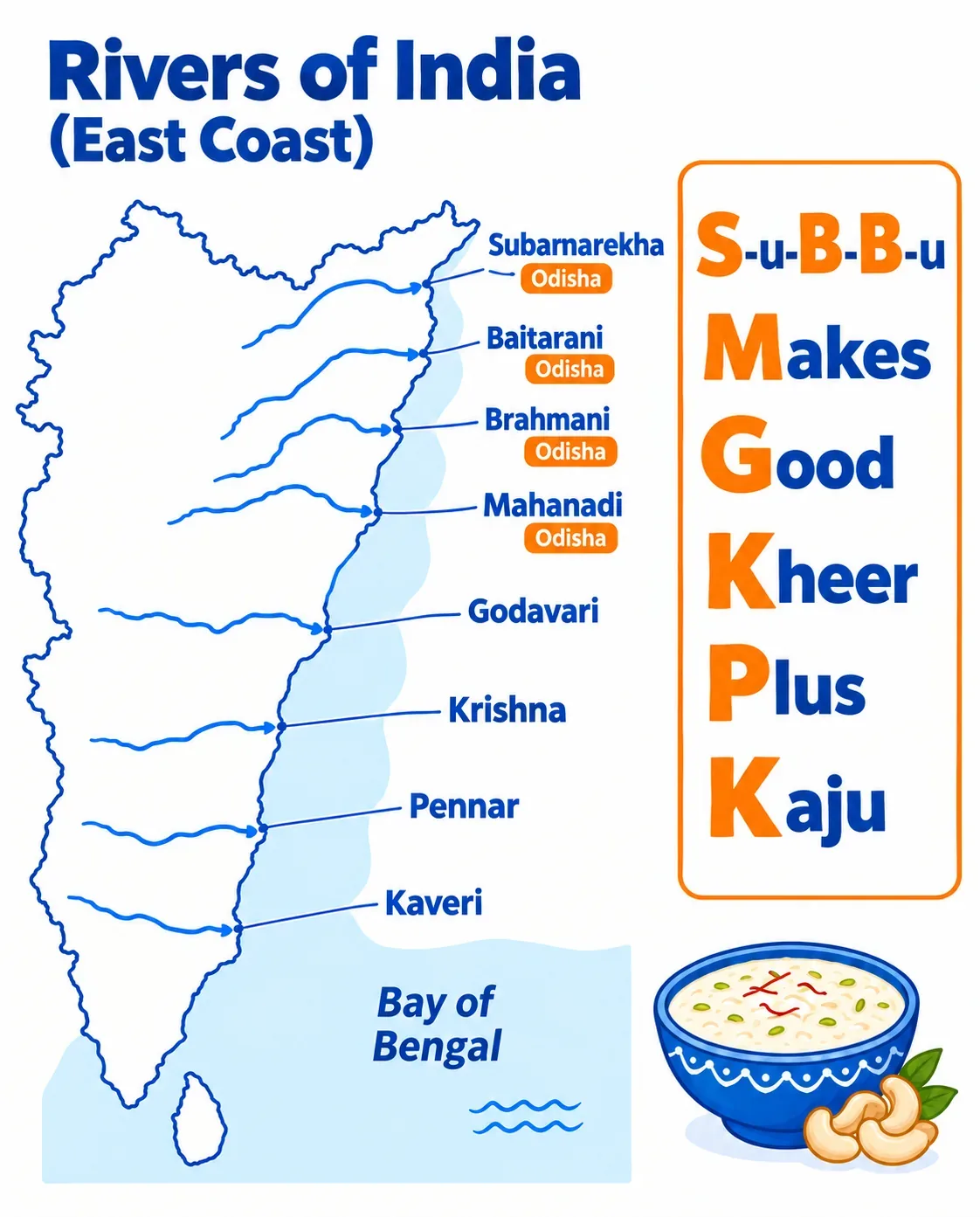
Letter | River | Remember |
|---|---|---|
S | Subarnarekha | Rises near Ranchi; meets the sea in Balasore district |
B | Baitarani | Rises at Gonasika in Kendujhar |
B | Brahmani | Flows past Rourkela and Talcher |
M | Mahanadi | Hirakud dam; Cuttack sits between it and its branch, the Kathajodi |
G | Godavari | Longest peninsular river (about 1,465 km); rises at Trimbakeshwar near Nashik; called Dakshin Ganga |
K | Krishna | Rises at Mahabaleshwar in Maharashtra |
P | Pennar | Rises in the Nandi Hills of Karnataka |
K | Kaveri | Rises at Talakaveri in Kodagu, Karnataka |
The first four are Odisha's own rivers, so if you are from Odisha you already know half the trick. The Baitarani and Brahmani reach the sea together near Dhamra.
Trick 4: The five prayags, "Very Nice Kids Read Daily"
Question: Name the five prayags on the Alaknanda in order, going downstream.
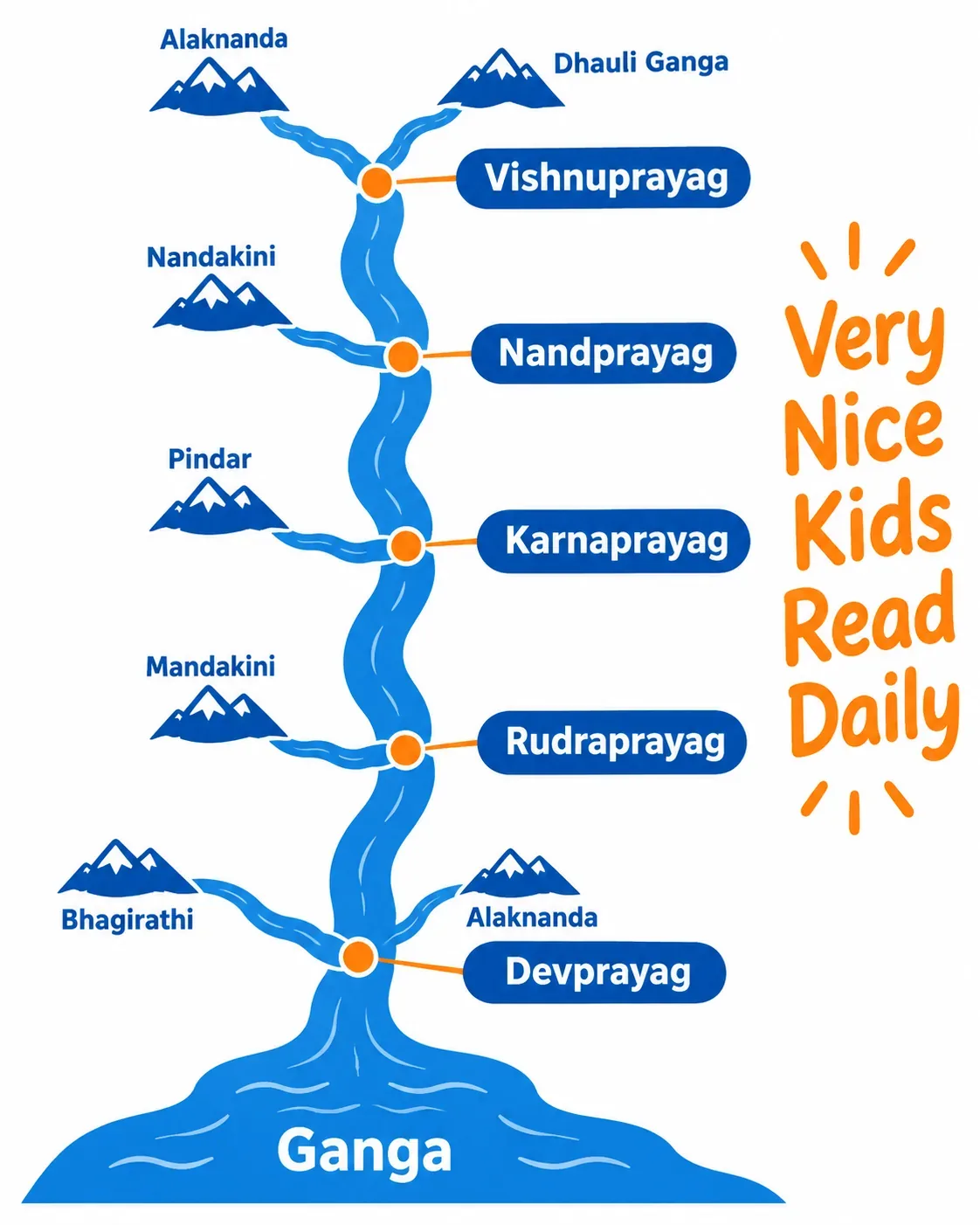
Prayag | River that joins the Alaknanda here |
|---|---|
Vishnuprayag | Dhauliganga |
Nandprayag | Nandakini |
Karnaprayag | Pindar |
Rudraprayag | Mandakini (comes down from Kedarnath) |
Devprayag | Bhagirathi |
At Devprayag the Alaknanda and the Bhagirathi meet, and from here the river is called the Ganga. The Bhagirathi starts at Gaumukh, the snout of the Gangotri glacier. All five prayags are in Uttarakhand.
Trick 5: Brahmaputra's four names, "The Siang Becomes Jamuna"
Question: By which names is the Brahmaputra known along its course?
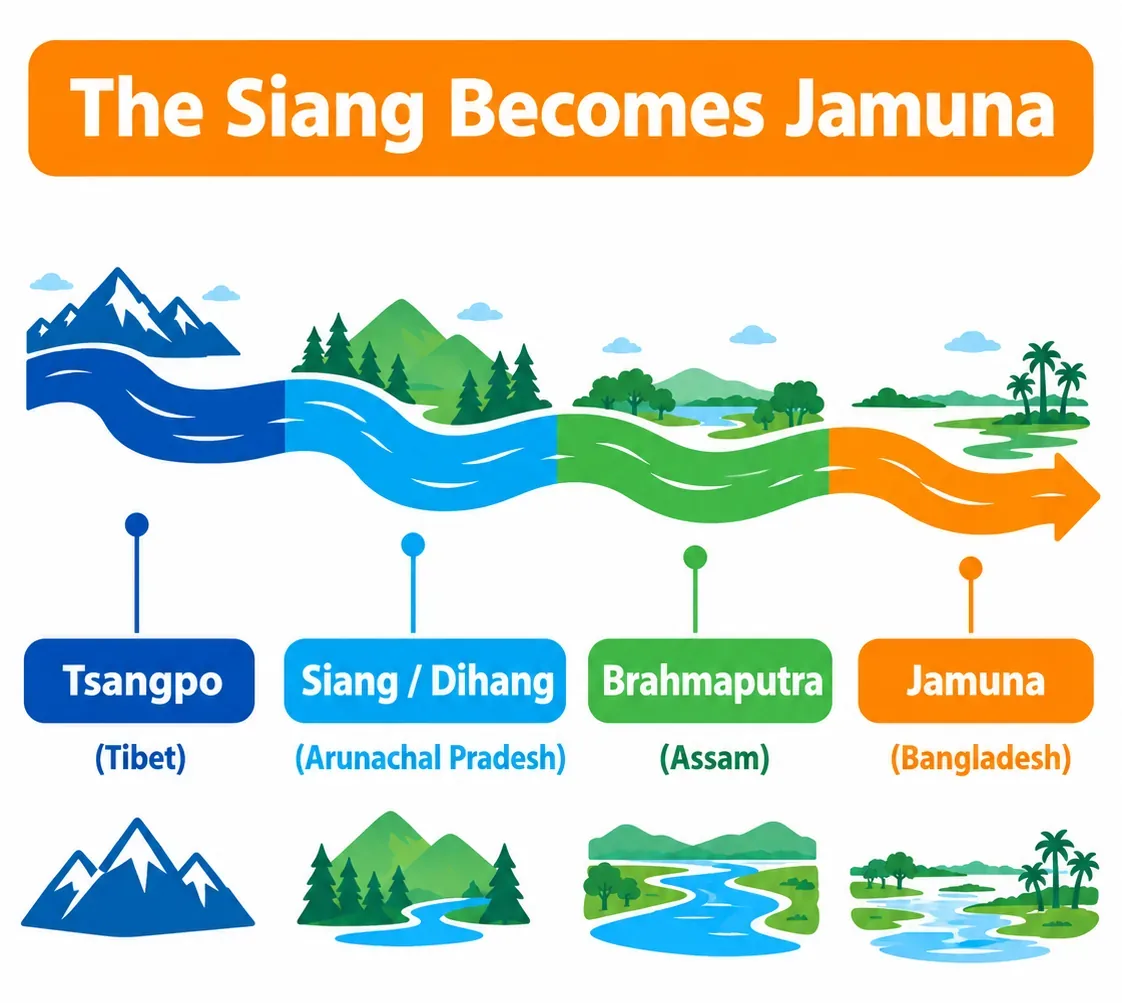
Tsangpoin Tibet, where it rises near Lake Mansarovar.
Siang(orDihang) once it enters Arunachal Pradesh.
Brahmaputrain Assam, after the Dibang and Lohit join it.
Jamunain Bangladesh. It then joins the Padma (the Ganga), and the combined river reaches the sea as the Meghna.
Majuli, on the Brahmaputra in Assam, is India's largest river island.
Don't mix them up: Jamuna in Bangladesh is the Brahmaputra. Yamuna in India is a tributary of the Ganga.
Trick 6: Yamuna's southern tributaries, "Chai Sabko Bahut Khush karti hai"
Question: Arrange Chambal, Sind, Betwa and Ken from west to east.
Chai = Chambal, Sabko = Sind, Bahut = Betwa, Khush = Ken. All four rise in central India and flow north into the Yamuna.
Chambal rises in the Janapav hills near Mhow. The National Chambal Sanctuary protects the gharial.
Ken and Betwa are being joined by the Ken–Betwa link project, the first project under India's national river-interlinking plan.
The Yamuna itself joins the Ganga at Prayagraj, at the Triveni Sangam.
Trick 7: Ganga's left-bank tributaries, "RaGo GhaGa KoMa"
Question: Arrange the left-bank tributaries of the Ganga from west to east.
Ra = Ramganga, Go = Gomti, Gha = Ghaghara, Ga = Gandak, Ko = Kosi, Ma = Mahananda. Say it like a chant: RaGo, GhaGa, KoMa.
Gomti flows through Lucknow.
Ghaghara, Gandak and Kosi come down from Nepal.
Kosi is called the "Sorrow of Bihar" because it keeps changing its course and floods the plains.
On the right bank, the two big ones are the Yamuna and the Son.
Trick 8: Amarkantak's two rivers
Question: Which two major rivers rise at Amarkantak?
Narmada and Son. Picture one hilltop with two rivers walking away from each other. The Narmada goes west to the Arabian Sea. The Son goes north and joins the Ganga near Patna. Amarkantak is in the Maikal hills, Anuppur district, Madhya Pradesh.
Trick 9: Two Odisha facts that keep coming back
Mahanadi rises at Sihawa in Dhamtari district, Chhattisgarh. The Hirakud dam near Sambalpur, opened in 1957, is among the longest earthen dams in the world.
Brahmani is formed at Vedavyas near Rourkela, where the Sankh and the South Koel meet.
For the rivers, hills and forests of each district, open the map on Explore Odisha (https://sikhyasetu.in/explore-odisha).
Rivers and cities
City | River |
|---|---|
Srinagar | Jhelum |
Delhi, Agra | Yamuna |
Lucknow | Gomti |
Varanasi, Patna | Ganga |
Kolkata | Hooghly |
Guwahati | Brahmaputra |
Ahmedabad | Sabarmati |
Surat | Tapi |
Jabalpur | Narmada |
Nashik, Rajahmundry | Godavari |
Vijayawada | Krishna |
Tiruchirappalli | Kaveri |
Hyderabad | Musi |
Cuttack, Sambalpur | Mahanadi |
Rourkela | Brahmani |
Jamshedpur | Subarnarekha |
10 questions examiners like
Which is the longest river of peninsular India? Godavari
Which river crosses the Tropic of Cancer twice? Mahi
Where do the Alaknanda and Bhagirathi meet? Devprayag
Which river is called the "Sorrow of Bihar"? Kosi
Where does the Narmada rise? Amarkantak
What is the Brahmaputra called in Bangladesh? Jamuna
Which is the westernmost of the five Punjab rivers? Jhelum
Which two rivers meet at Vedavyas to form the Brahmani? Sankh and South Koel
Which is India's largest river island? Majuli
Which west-flowing river has Surat on its banks? Tapi
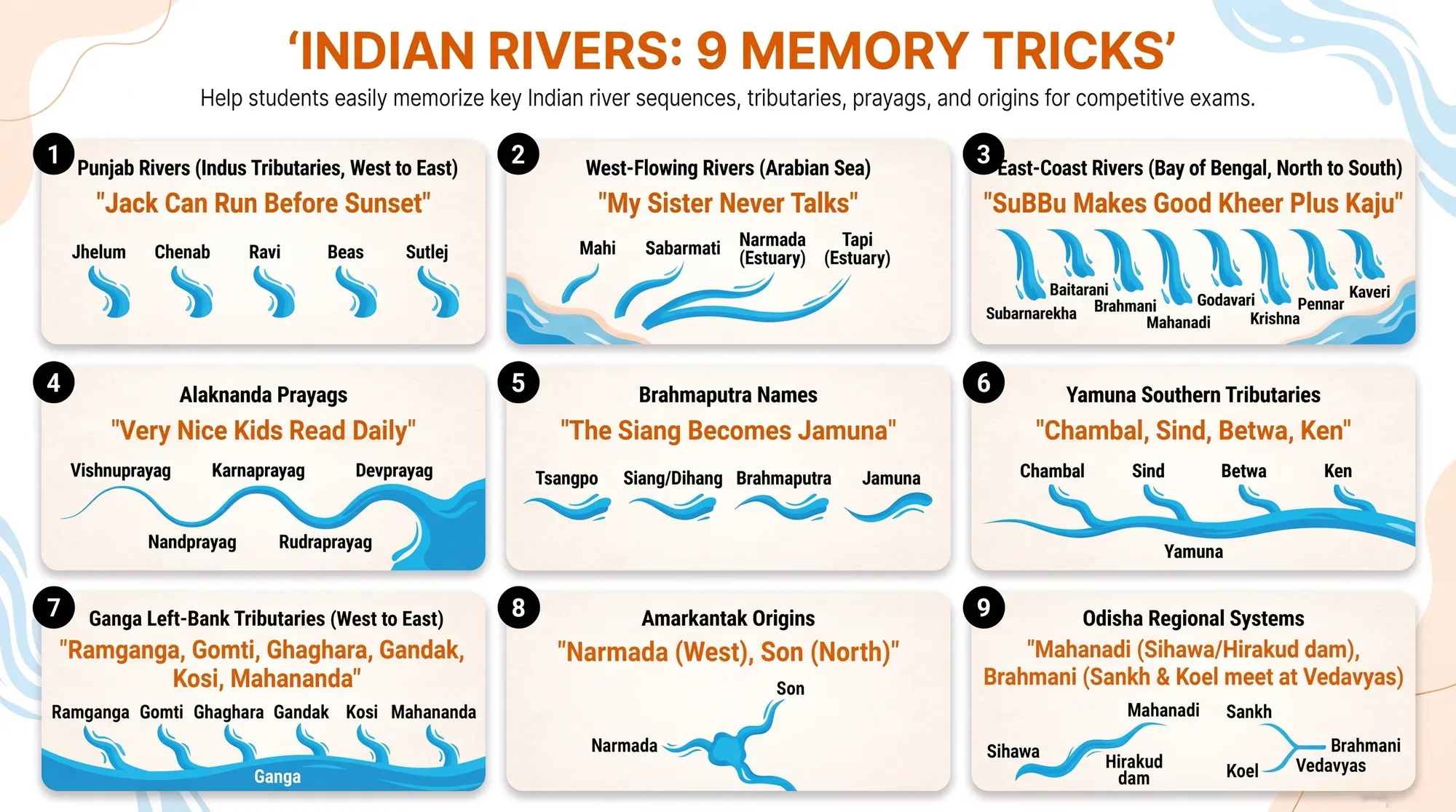
All 9 tricks on one page
Save this image on your phone and look at it once a day for a week. That is usually enough for the orders to stick.